

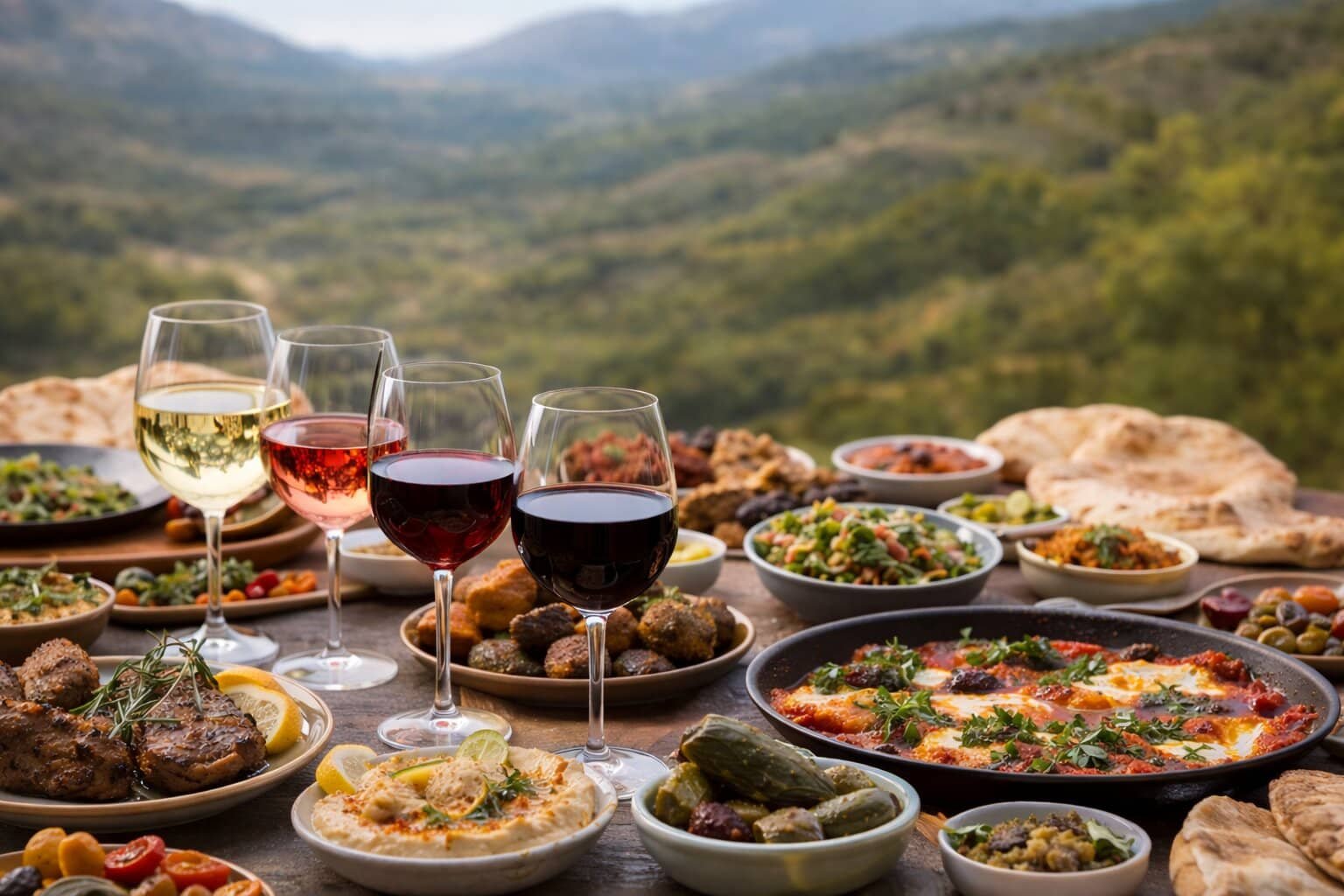
Israeli wines are made to be enjoyed with food, and the right pairing brings out a completely different side of each bottle.
From bold Galilee reds to crisp Judean Hills whites, this guide matches Israel’s best wines with the dishes they were born to accompany, rooted in the flavours of Mediterranean, Middle Eastern, and Levantine cuisine.
Why Israeli Wine and Food Pairing Matters
Israel sits at the crossroads of Mediterranean, Middle Eastern, and Levantine cooking. Its wines have evolved alongside those flavours, which is why the best pairings often feel natural rather than forced. High-acid whites cut through tahini and olive oil, structured reds hold their own against spiced lamb and slow-cooked meats, and aromatic rosés work beautifully with the endless variety of mezze.
Once you start pairing Israeli wines with the food traditions they grew up beside, the wines feel more complete. Texture, acidity, spice, salt, and freshness all start making more sense in the glass.
White Wines: What to Eat with Israeli Whites
Sauvignon Blanc from the Golan Heights or Galilee
Crisp, herbaceous, and citrus-driven. A natural match for fresh salads, grilled fish, hummus, tabbouleh, and lemon- or tahini-based dishes.
Chardonnay from the Judean Hills or Upper Galilee
Unoaked or lightly oaked styles pair well with grilled sea bass, roast chicken, labane, and creamy vegetable dishes.
Marawi and Hamdani
Aromatic, lightly floral, and gently mineral. Excellent with mezze, grilled vegetables, fish kebabs, and Middle Eastern-spiced poultry.
Best mindset for Israeli whites: think freshness, herbs, citrus, olive oil, dips, and lighter dishes that let acidity and aromatics shine.
Red Wines: What to Eat with Israeli Reds
Cabernet Sauvignon from the Golan Heights
Bold, structured, and built for protein. Best with lamb chops, beef steak, shawarma, and slow-braised short ribs.
Syrah from the Judean Hills
Peppery, savoury, and dark-fruited. A strong match for lamb kebabs, merguez sausages, burgers, roasted eggplant, and hearty stews.
Merlot and Bordeaux-Style Blends
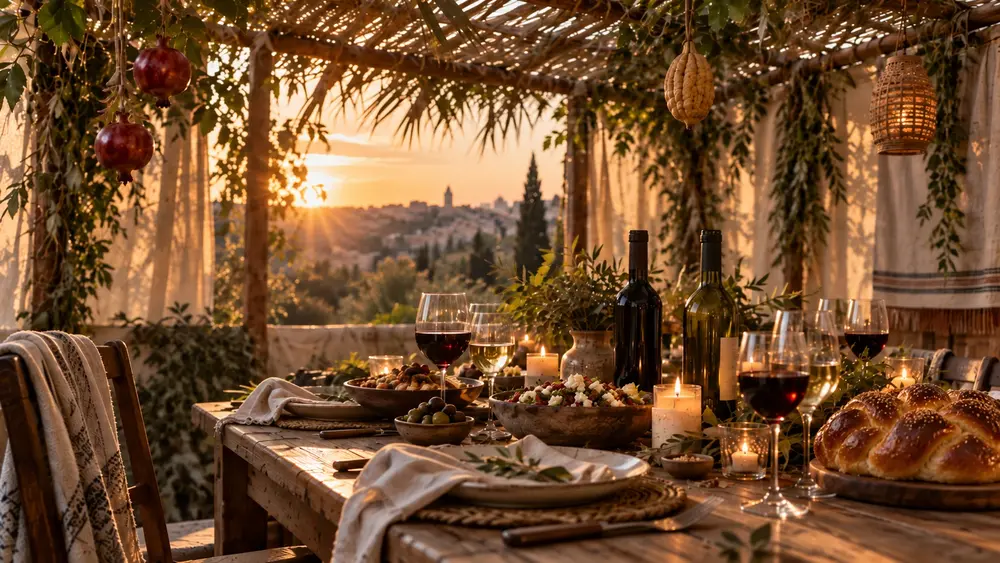
Softer and more approachable. Great with roast chicken, veal, mushrooms, and richer Shabbat-style dinners.
Old Vine Carignan
Rustic, earthy, and deeply flavoured. Pairs beautifully with slow-cooked lamb, stuffed peppers, lentils, and grilled meats with charred vegetables.
Israeli reds tend to handle spice and smoke especially well, which is one reason they feel so at home with the region’s food.
Rosé Wines: The Most Food-Friendly Category
Israeli rosés are among the most versatile wines in the country’s portfolio. Their combination of freshness, fruit, and light structure makes them ideal for mezze feasts, grilled fish, roast chicken, spiced vegetables, and summer salads.
A dry Israeli rosé alongside a full mezze spread is one of the most satisfying and easygoing pairings you can make. It also works especially well with lighter Shabbat starters.
Sparkling and Dessert Wines
Israeli sparkling wines pair especially well with salty snacks, smoked fish, fried foods, and aged cheeses. The bubbles and acidity reset the palate and keep richer foods from feeling heavy.
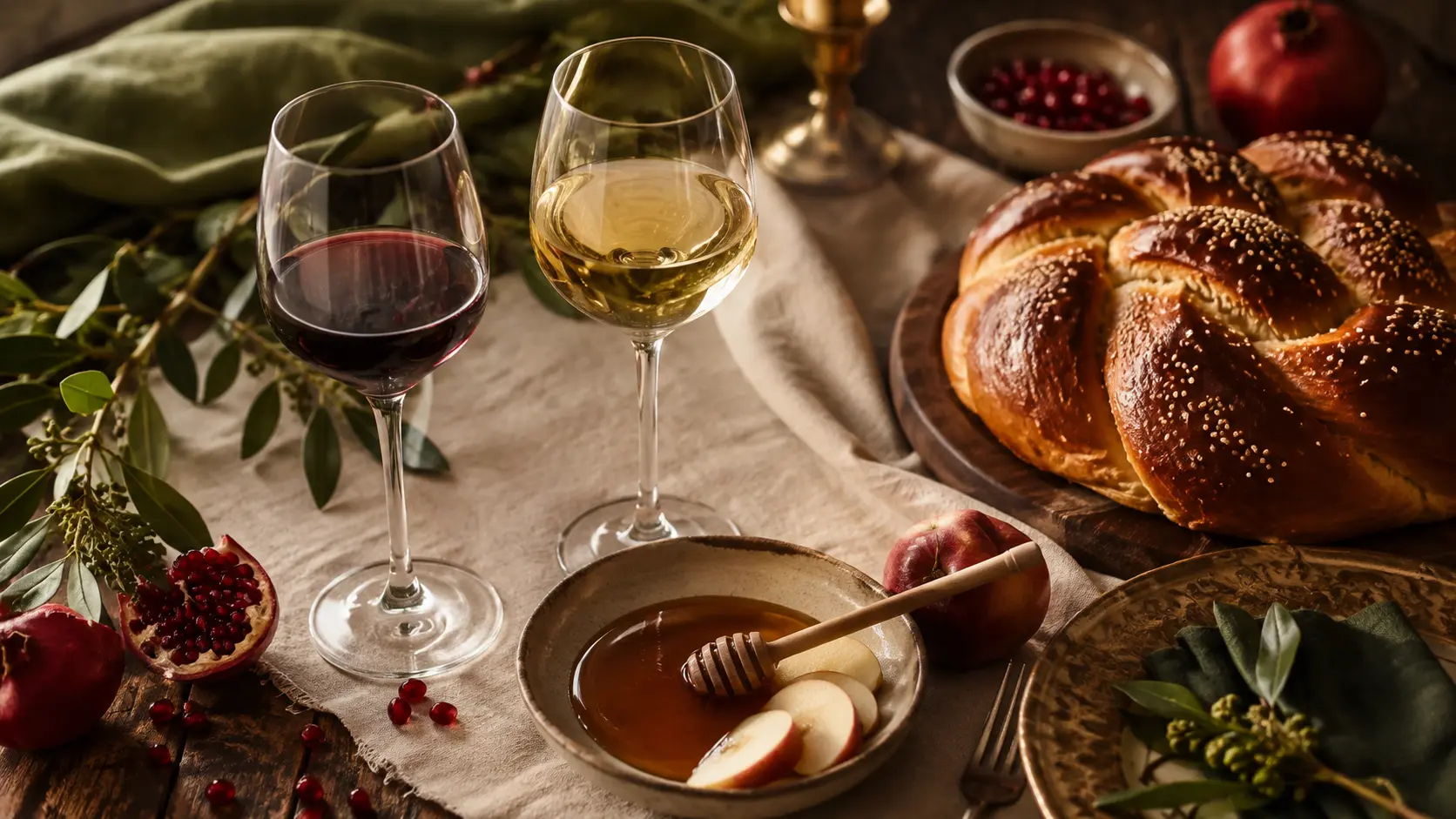
For dessert, a Muscat or late-harvest white works beautifully with fresh fruit, honey cake, almond pastries, or lighter sweet finishes where aromatics matter as much as sugar.
Quick Pairing Reference
Tips for Getting the Most from Israeli Wine and Food Pairing
- Start with the dish and work backward to the wine. The meal usually tells you what level of body, fruit, and acidity you need.
- If the food is heavily spiced, choose wines with enough fruit and structure to avoid being overwhelmed.
- If the meal is fresh and light, reach for whites and rosés with lively acidity.
- Match the energy of the wine to the energy of the food. A simple salad needs a simple wine. A slow-roasted lamb shoulder deserves a serious red.
- Also think about the occasion. Weeknight pairings and celebratory bottles do not need to play the same role.
Simple rule: Israeli wine and food work best when they tell the same story of place, climate, and culture.
Conclusion: Let Israeli Wine and Food Tell the Same Story
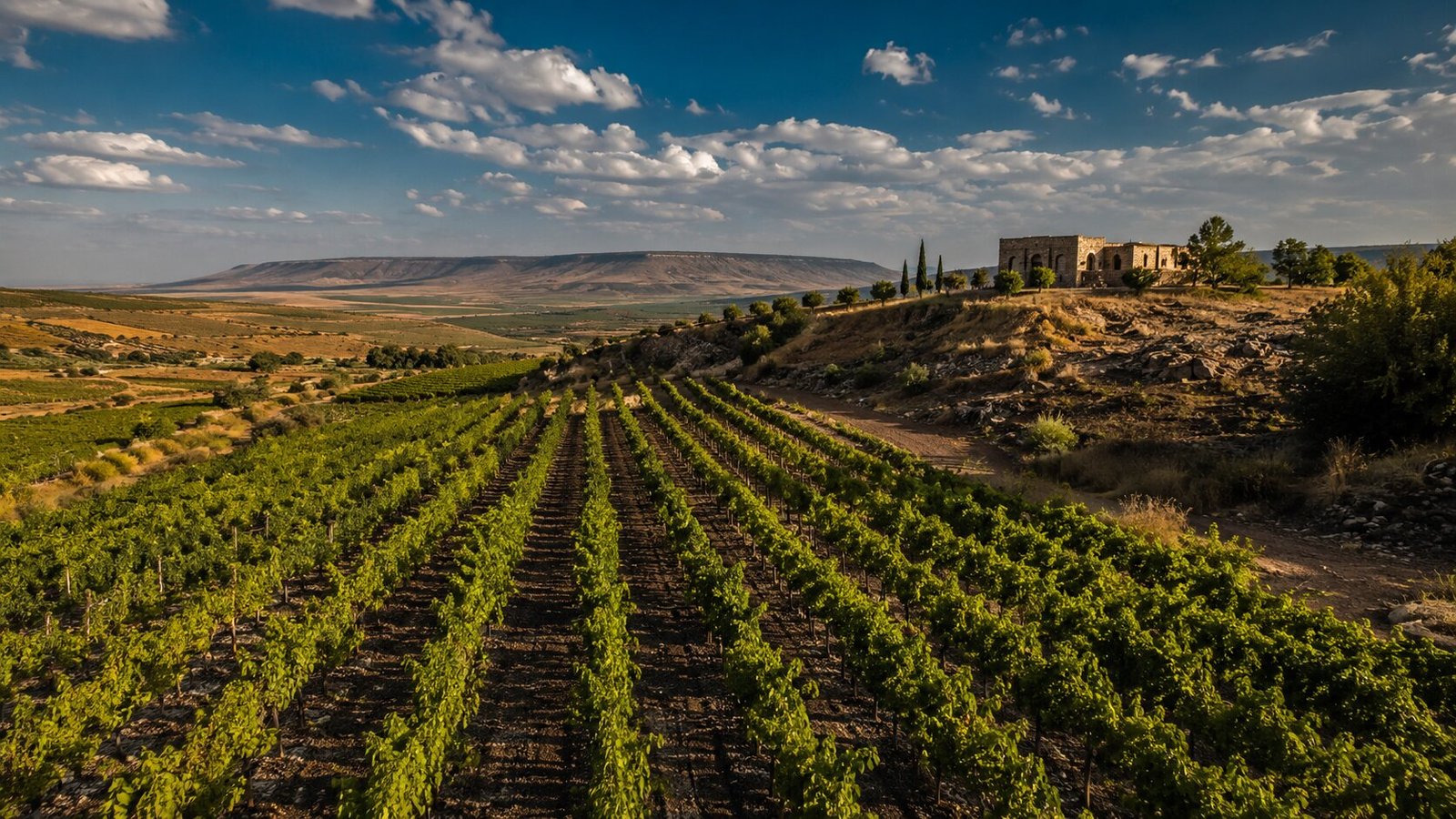
The best Israeli wine and food pairings do more than taste good together. They reflect the same landscape, ingredients, and traditions. A Judean Hills Syrah with slow-cooked lamb or a crisp northern Sauvignon Blanc with mezze is not just a pairing. It is a sense of place on the table.
That is the real beauty of exploring Israeli wine with food. You are not simply matching flavours. You are experiencing a connection between bottle, dish, and land that feels completely natural.
Pair thoughtfully, pour generously, and let Israeli wine show you what it was made to do.

You must be logged in to post a comment.