

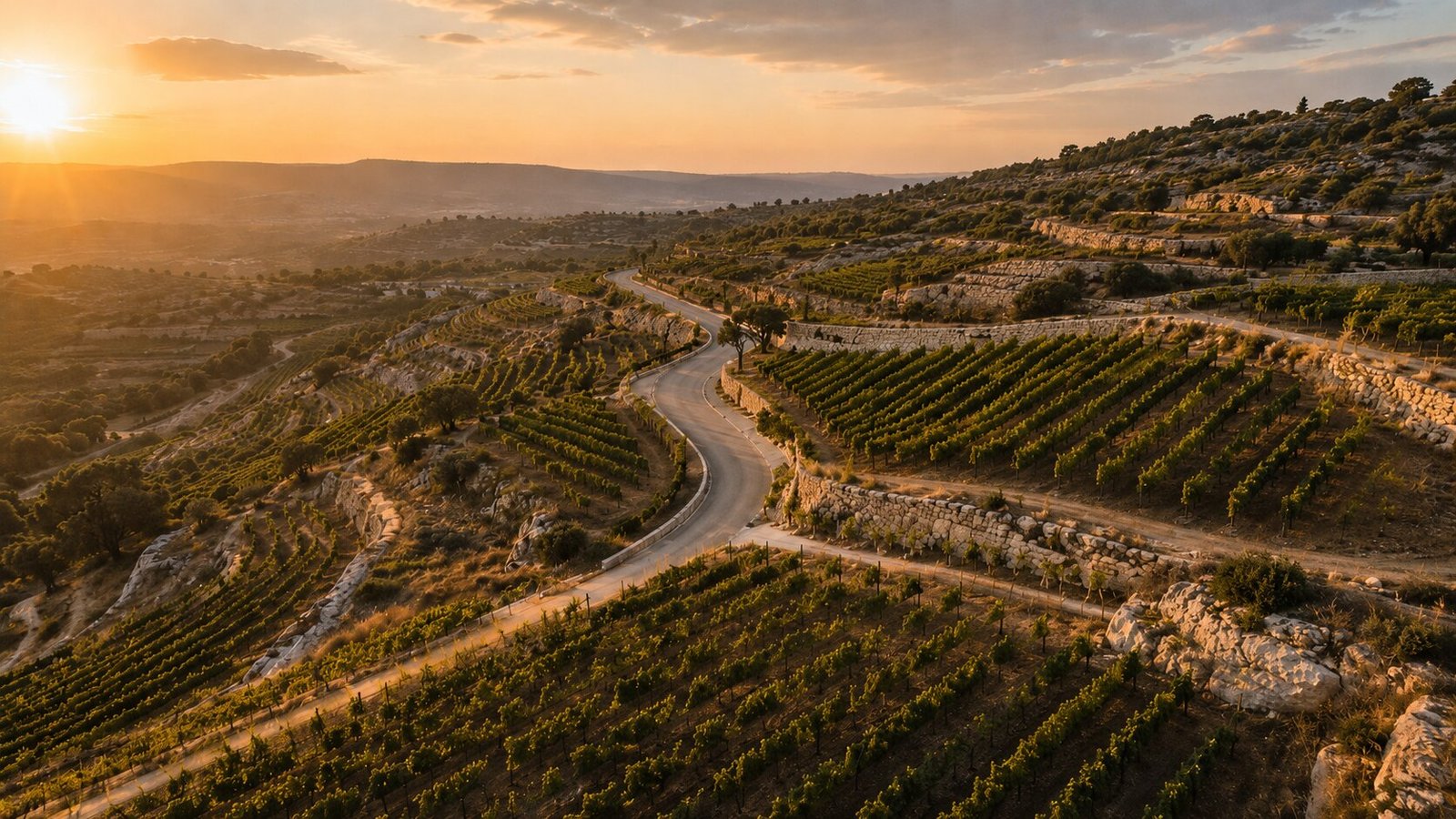
Israel’s wine regions are among the most rewarding - and most overlooked - wine travel destinations in the world.
From volcanic heights above the Sea of Galilee to desert vineyards in the Negev, Israel packs remarkable wine diversity into a small country. Wine tourism here has grown significantly in 2026, with more wineries welcoming visitors and building experiences around their wines than ever before. This guide covers everything you need to plan a memorable wine country visit.
Israel’s Five Wine Regions at a Glance
Israel is small enough to drive between wine regions in a single day, but the differences in altitude, soil, and climate between them are striking. Understanding the geography helps you plan a more focused and rewarding visit.
Golan Heights
Israel’s most famous wine region. High altitude, volcanic basalt soils, and cooler temperatures produce some of the country’s finest wines, with long, balanced ripening seasons.
Galilee & Upper Galilee
Forested slopes, rocky ridges, and elevations approaching 900 metres. A diverse region producing excellent reds, whites, and rosés from boutique and mid-size producers alike.
Judean Hills
Limestone hillsides west of Jerusalem, shaped by altitude and rocky terrain. Known for wines with freshness and structure - Israel’s most intellectually exciting wine region for many enthusiasts.
Mount Carmel & Coastal Plain
Israel’s oldest modern wine region, where Baron Edmond de Rothschild planted the first vineyards in the 1880s. Warmer and more Mediterranean in character, home to some of Israel’s largest historic wineries.
The Negev
Israel’s most surprising wine region. Desert elevation, extreme temperature swings, and mineral-rich loess soils produce wines of real character from a handful of pioneering producers.
Golan Heights: Start Here for a First Visit
The Golan Heights is the natural starting point for first-time wine tourists. It is home to Israel’s most internationally recognised winery - Golan Heights Winery, producer of the Yarden brand - and offers dramatic landscapes to match. Elevations up to 1,200 metres, volcanic basalt soils, and cool nights produce consistently fresh and structured wines across a broad range of varieties.
- Golan Heights Winery (Yarden, Gamla, Hermon) - Open daily, check Shabbat hours. Guided tours covering the full winemaking process and an excellent tasting room. The most visited winery in Israel.
- Pelter Winery - Boutique, appointments recommended. Known for its intimate Thursday chef dinners and a thoughtful food-and-wine approach in Kibbutz Ein Zivan.
- Assaf Winery - A wine village concept in Kidmat Tzvi. Cabins, farm-to-table dining, and vineyard walks alongside the tasting. Overnight stays available.
- Odem Mountain Winery - Israel’s northernmost winery. Volcanic basalt soils and striking elevation produce wines with real mineral character. A rewarding detour toward Mount Hermon.
Golan tip: Combine a winery visit with a drive through the Gamla Nature Reserve or toward Mount Hermon. The region rewards those who linger rather than rush.
Galilee: Boutique Producers and Mountain Scenery
The Galilee and Upper Galilee offer some of Israel’s best boutique winery experiences. This is a region of forested ridges, ancient villages, and varied terrain where small family producers sit alongside larger, well-established names.
- Tabor Winery - Sweeping views of Mount Tabor, advance booking recommended. Award-winning reds, whites, and the excellent Barbara’s Artisanal range. Open primarily in spring and summer.
- Galil Mountain Winery - A partnership between kibbutz members and Golan Heights Winery. Well-set-up tasting room, consistently good wines, and an approachable visitor experience.
- Or Haganuz - A boutique producer making reds of real character from high-altitude Galilee vineyards. Worth seeking out for serious wine lovers.
The Galilee also benefits from proximity to Nazareth, the Sea of Galilee, and some of Israel’s most beautiful hiking trails. Build your winery visit into a wider northern itinerary rather than treating it as a standalone day.
Judean Hills: Serious Wine on Jerusalem’s Doorstep
For wine lovers who prioritise depth over easy scenery, the Judean Hills are Israel’s most compelling wine destination. Limestone hillsides west of Jerusalem, planted on rocky terraces and elevated ridges, produce wines with precision and site expression that few Israeli regions can match.
- Domaine du Castel - One of Israel’s most acclaimed wineries. Family-run, high-altitude, and producing wines that consistently score among Israel’s best internationally. Visits strictly by appointment.
- Flam Winery - Family estate run by brothers who trained in Tuscany. Warm tasting room atmosphere, excellent reds and whites, and a vineyard setting that rewards a quiet afternoon.
- Kadma Winery - Unique in Israel for fermenting wines in ancient Georgian clay amphorae. A fascinating visit for those who want to understand winemaking history alongside modern results.
- Tzora Vineyards - Biodynamic farming, single-vineyard wines, and a commitment to site expression that has made Tzora a favourite among Israel’s most serious wine drinkers.
Judean Hills tip: Most wineries here require advance booking. Call or email before visiting - the experience is almost always more personal and rewarding when arranged ahead.
The Negev: Israel’s Wine Frontier
The Negev is not where most people expect to find fine wine. But the combination of desert elevation, mineral-rich loess soils, and extreme day-to-night temperature swings has created conditions that produce wines of genuine originality. A visit here is less like a classic wine country tour and more like a discovery.
- Nana Estate Winery - Located near Mitzpe Ramon at 800 metres altitude. Bold yet elegant wines with a distinctive desert quality. One of Israel’s most original and inspiring wine stories.
- Carmey Avdat Farm & Winery - Produces wine using ancient Nabataean desert farming techniques. A remarkable combination of historical and viticultural experience.
A Negev wine trip pairs naturally with the Ramon Crater, stargazing, and the desert landscape itself. Plan for at least a full day if travelling from central Israel.
Planning Your Visit: Practical Tips
- Book ahead. Most Israeli boutique wineries operate by appointment, especially on weekdays. Contact them at least a few days in advance. Larger wineries like Golan Heights Winery and Tabor often accept walk-ins during open hours.
- Saturdays are complex. Most kosher wineries close on Shabbat. Plan visits Sunday through Friday. Some wineries in tourist-heavy areas may open Saturday afternoons - confirm directly before travelling.
- Drive, don’t rush. Budget at least two to three hours per winery visit, including travel, tasting, and time to absorb the setting. Israeli wine regions reward those who slow down.
- Eat as you go. Many wineries offer food alongside tastings, and Israel’s wine regions sit within or near excellent culinary destinations. The Galilee in particular has a thriving farm-to-table scene that pairs naturally with the wines.
- Consider a guided tour for a first visit. Wine tour companies including Israel Wine Journeys and others based in Tel Aviv and Jerusalem can remove logistics and add context - especially valuable for those new to Israeli wine.
Conclusion: Israel’s Wine Country Is Ready for You
Israeli wine tourism in 2026 is in a stronger position than it has ever been. Wineries have invested in visitor experiences, the wines have reached a new level of quality, and the landscapes and culture surrounding them make every visit something more than just a tasting.
Whether you spend a single afternoon in the Judean Hills or a week moving between regions, you will leave with a completely different understanding of Israeli wine - and with a boot full of bottles that remind you why you came.
Israel’s wine country is small enough to explore in a weekend and rich enough to return to for a lifetime.

You must be logged in to post a comment.