

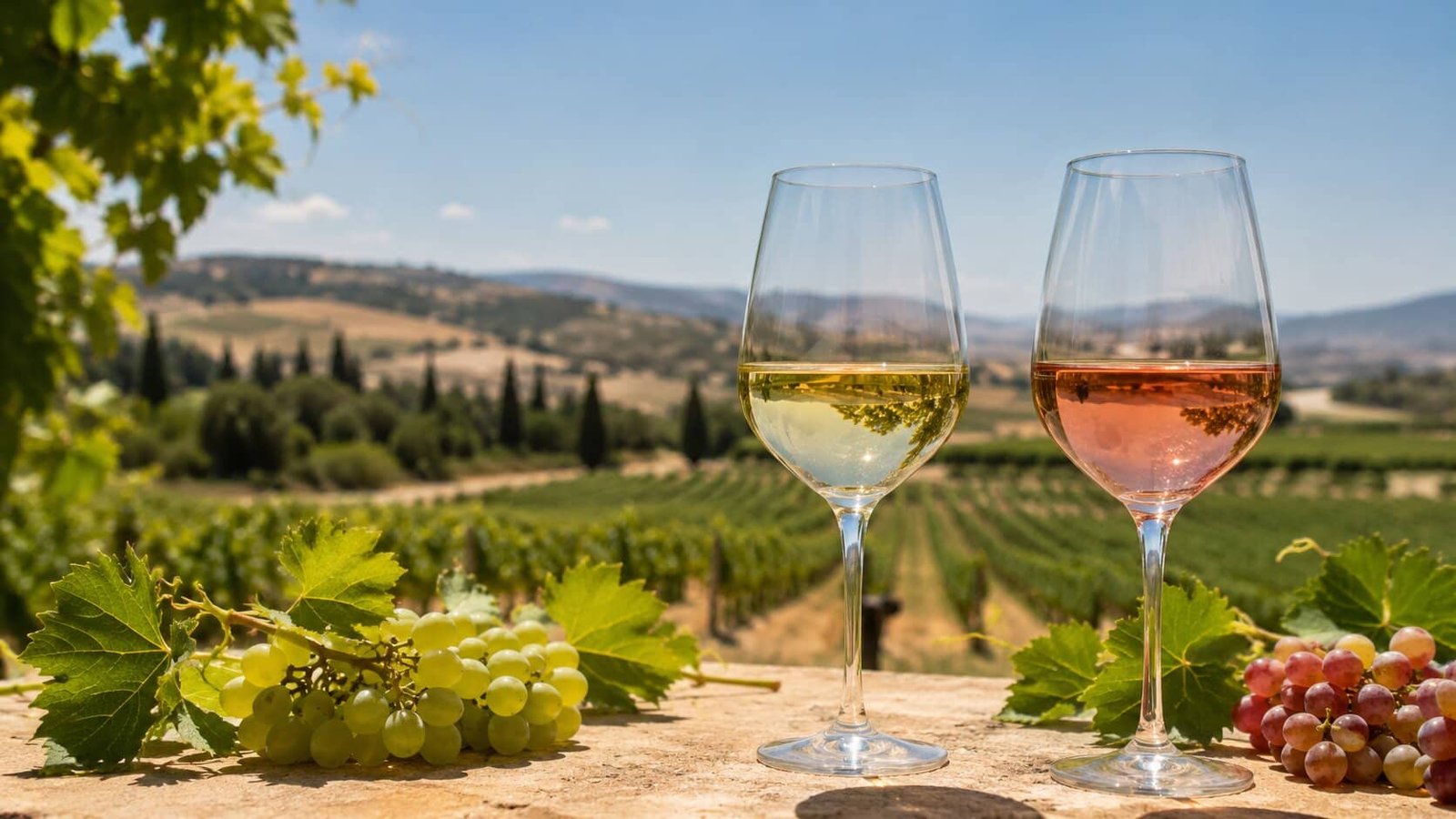
Israeli wine has always been about more than red. It is time the whites and rosés got the recognition they deserve.
Talk about Israeli wine and the conversation almost always turns to Cabernet Sauvignon, Merlot, or Syrah. Those reds have earned their reputation. But 2026 has brought a clear shift in what Israel’s best producers are celebrating - and what wine lovers are reaching for - as the country’s whites and rosés step firmly into the spotlight.
Why Israeli Whites and Rosés Are Having a Moment
Several forces are driving the rise of Israeli whites and rosés at the same time. Israeli summers are hot, and lighter, fresher wines suit the climate and the food. Wine drinkers globally are moving toward greater freshness and lower alcohol. And Israeli winemakers - many of whom trained in France and Italy - are increasingly confident working with white varieties and pushing for elegance over weight.
The result is a category that has improved dramatically over the past decade. Israeli whites now appear on international wine lists, score well in blind tastings, and pair brilliantly with the food this country is famous for: mezze, grilled fish, vegetables, and herb-driven dishes that have always called for something lighter than a heavy red.
2026 trend: Sommeliers and competition judges have noted a clear shift toward freshness and refinement in Israeli white wines, with more producers choosing to preserve natural acidity and reduce oak influence across their white ranges. Rosé has also grown at wine festivals including Shavuot celebrations, where it has become the default choice for outdoor and dairy meals.
Israeli White Wines: The Key Varieties to Know
Sauvignon Blanc
Golan Heights · Galilee · Judean Hills
Israel’s most widely planted and most reliably excellent white variety. At altitude in the Golan and Galilee, Sauvignon Blanc produces wines with crisp citrus, herbaceous lift, and bright acidity. The best examples compete with good New Zealand and Loire bottlings at a fraction of the price.
Chardonnay
Judean Hills · Upper Galilee · Golan Heights
Israeli Chardonnay has moved decisively away from heavy, over-oaked styles. Today’s best examples are unoaked or lightly wooded, with green apple, citrus, and white peach character. Yarden Chardonnay and 1848 Winery’s 2nd Generation Chardonnay are standouts - unoaked, fresh, and very food-friendly.
Roussanne & Viognier
Judean Hills · Galilee
These Rhône white varieties are finding a natural home in Israel’s warmer growing zones. Razi’el‘s Roussanne - fermented in old barrels for eight months - delivers juicy, lush, savoury depth with a salty, mineral edge. Viognier offers perfumed stone fruit with a rich but not heavy texture.
Marawi & Hamdani
Indigenous Israeli varieties
Among the most exciting developments in Israeli wine. These ancient, indigenous grape varieties - nearly extinct until recent years - produce wines with a distinct aromatic identity: floral, lightly mineral, and fresh. Marawi has become a symbol of Israel’s unique wine heritage. No other country makes wine from this grape. (Gvaot Winery leads this revival.)
Gewurztraminer & Muscat
Various regions
Aromatic varieties that thrive in Israel’s conditions. Usually made dry or off-dry, they offer floral and spiced character that pairs especially well with Middle Eastern cuisine, cheese boards, and Shavuot festival foods. Strong value options exist across both varieties.
Israeli Rosé: Dry, Food-Friendly, and Underrated
Israeli rosé has suffered from an image problem that the wine itself does not deserve. For too long it was associated with sweet, easy-drinking bottles. That category still exists, but it sits alongside a growing range of serious, dry rosés that stand comparison with good Provençal or Sardinian examples.
What makes Israeli rosé particularly compelling is how naturally it pairs with Israeli food. A dry rosé alongside mezze, grilled fish, spiced chicken, or a Shabbat table is one of the most satisfying and easygoing wine moments you can create. It works where a red would be too heavy and a white too narrow.
Rosé Highlights for 2026
Barbara’s Artisanal - Elements by Tabor, 2025
Pale, refined, and dry. Red berry freshness with a clean mineral finish. Elegant enough for a dinner table, easy enough for a summer afternoon. One of the best rosés at its price point in Israel.
Dalton Off-Dry Rosé
Fruity and soft with aromas of lavender and fresh strawberry. Light, elegant, and refreshing - an excellent introduction to Israeli rosé for those newer to the category.
Rosé Caledoc by Nahal Mony, 2024
Made from the Caledoc grape - unusual in Israel and worth finding. Pale and dry with a light aromatic quality that distinguishes it from standard rosé blends. A good discovery bottle.
Shavuot angle: Israeli rosé has become the go-to wine for Shavuot, the spring harvest festival celebrated in late May or June. Its versatility with dairy foods, cheese platters, blintzes, and lighter summer meals makes it the natural choice for a holiday that celebrates freshness and abundance.
Producers Leading the Way
These are the producers most consistently worth seeking out when exploring Israeli whites and rosés:
Yarden / Golan Heights Winery
Golan Heights
The Yarden Chardonnay is among Israel’s most recognised white wines internationally, and their Sauvignon Blanc and Muscat are reliable and well-made. Consistent quality across a range of price points, widely available across Israel and internationally.
Flam Winery
Judean Hills
Flam’s whites and rosé are underrated relative to their reds. The Blanc shows Rhône-inspired complexity, and the rosé is among the Judean Hills’ most food-friendly bottles. Brothers trained in Tuscany bring an Italian sensibility to Israeli terroir.
Tabor Winery
Lower Galilee
The Barbara’s Artisanal range stands out - elegant, fresh, and well-made. Tabor has invested seriously in its white and rosé production in recent years, and it shows clearly in the bottle.
Razi’el Winery
Judean Hills
Producing some of the most distinctive whites in Israel, including a Roussanne aged in old barrels that delivers genuine complexity and a savoury, mineral character. A winery worth following closely for white wine lovers.
Gvaot Winery
Samarian Highlands
At the forefront of Israel’s indigenous grape revival. The Marawi white is historically significant and genuinely delicious - a wine that tells a story no other country can tell. An essential bottle for anyone serious about Israeli wine.
Food Pairing: Where Israeli Whites and Rosés Shine
Israeli whites and rosés were shaped alongside one of the world’s great food cultures. These pairings are not theoretical - they have been tested across thousands of tables in homes, restaurants, and wineries across the country.
Conclusion: Time to Go Beyond Red
Israeli white and rosé wines have earned their place at the table. The quality is there, the variety is there, and the food culture surrounding them is among the best in the world. The only thing holding many wine drinkers back is habit.
Next time you reach for an Israeli red, consider what sits beside it on the shelf. A Galilee Sauvignon Blanc chilled for an hour, a dry Judean Hills rosé alongside mezze, or a glass of Marawi that connects you to thousands of years of winemaking in this land - these are not compromises. They are discoveries worth making.
Israel has always made wine beyond the red. It is time more people tasted it.

You must be logged in to post a comment.