

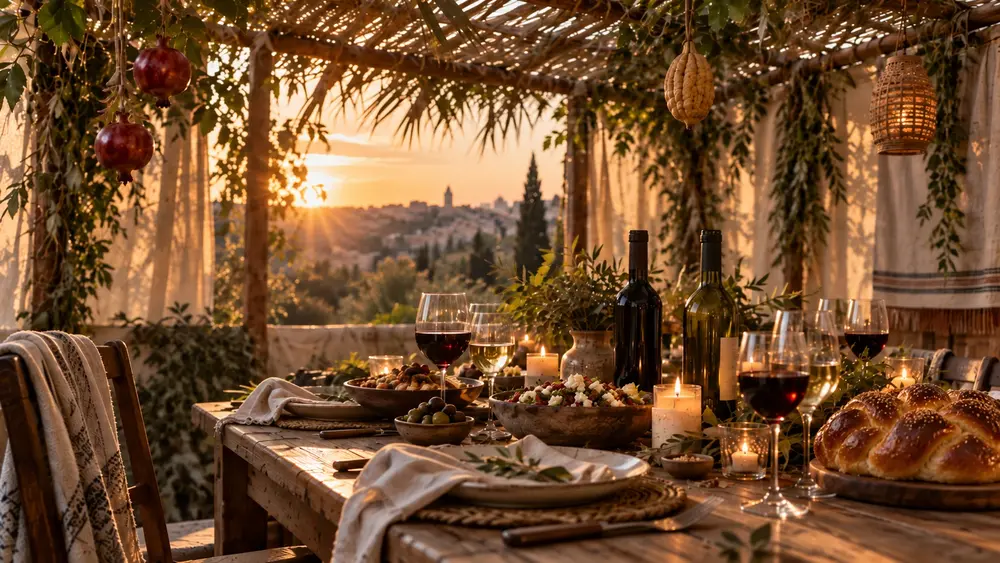
Seven days of meals under the schach, a table that never quite empties, and guests arriving every night - Sukkot is the holiday that rewards a well-stocked cellar.
Sukkot is the marathon of the Jewish calendar - not one big dinner but a full week of them, eaten outdoors in the sukkah as the first cool evenings of autumn settle in. It is the festival of ushpizin, of welcoming guests, of long lunches that drift into the afternoon and Simchat Torah nights that end in song. That calls for a different kind of wine list than a single seder: bottles that pour generously for a crowd, whites and rosés crisp enough for a warm afternoon, reds with the backbone for a festive meat meal, and something sparkling to carry the joy through to the end. Below we go bottle by bottle - the specific wines worth seeking out from Israel’s best producers, what each one actually tastes like, and where it belongs on your Sukkot table.
The First-Night Feast: Bold Reds for the Sukkah
The opening Yom Tov meal is the big one - slow-cooked meat, stuffed vegetables, a table dressed for the chag. This is where you reach for a serious red with the structure to stand up to rich food and the generosity to keep refilling glasses. Three flagships lead the field.
Flam Winery
Judean Hills
Seek out: Flam Noble, the winery’s flagship Bordeaux-style blend of Cabernet Sauvignon, Merlot and Cabernet Franc. It is polished and age-worthy - cassis and graphite over fine, firm tannins - the bottle to open when you want the table to go quiet for a moment. If Noble is a stretch, Flam’s Syrah Reserve delivers much of the same drama, all black pepper and dark plum, for less.
Golan Heights Winery
Katzrin, Golan Heights
Seek out: Yarden Katzrin, the estate’s icon red - a dense, cellar-worthy Cabernet-led blend made only in the best vintages. For a more everyday festive pour from the same house, the Yarden El Rom Cabernet Sauvignon offers cool-climate structure and cassis at a friendlier price. Both have the acidity to cut through brisket and stuffed cabbage alike.
Psagot Winery
Judean Mountains
Seek out: Psagot Edom, the winery’s signature blend, grown on the limestone slopes north of Jerusalem. It is warm and mouth-filling - ripe black fruit, a little sweet spice, rounded tannins - a crowd-pleaser that reads as generous rather than austere, exactly the mood of a Sukkot table.
Pour it right: The sukkah’s cool evening air is a gift for big reds - it brings a warm-country wine into its ideal serving range. Decant the flagships 30-45 minutes before the meal, and if the night turns chilly, don’t let them drop too cold; bring them back inside between courses.
Ushpizin & Hosting a Crowd: Wines by the Case
Sukkot is built on hospitality - a week of guests means you are pouring by the case, not the bottle. The goal here is honest, food-friendly wine that overdelivers for the price, so you can keep glasses full without keeping one eye on the budget.
Dalton Winery
Upper Galilee
Seek out: Dalton Alma, a supple Rhône-style blend built on Shiraz and Grenache. It is juicy, peppery and immediately likeable - the kind of red that disappears fast at a big table. Dalton’s Reserve Cabernet and Shiraz are the step up when the meal turns serious.
Barkan Winery
Kibbutz Hulda
Seek out: The Barkan Altitude series - +624 in particular - grown high in the Upper Galilee for extra freshness and grip. Widely available, reliably kosher and easy to buy in quantity, it is the workhorse a week of meals is built on. Barkan Superieur is the flagship when you want to trade up.
Recanati Winery
Emek Hefer
Seek out: Recanati Special Reserve for a red with real depth at a mid-week price - but the most interesting bottle here is the Recanati Marawi, a crisp, saline white made from an indigenous grape rescued from near-extinction. Pour it and you have a story to tell your guests, which is half of what Sukkot conversation runs on.
Keep it kosher through many hands: With a full sukkah, bottles get passed, poured and refilled by guests all night. A mevushal wine stays kosher even when handled by someone who is not observant - which is why so many Israeli wineries offer a mevushal version. If that matters for your table, check the label, and see our Kosher Wine 101 guide for the full picture.
For more bottles that punch above their price, our roundup of Israel’s best value wines under ₪100 is built for exactly this kind of week, and the full food-pairing guide will match anything else your menu throws up.
Warm Afternoons in the Sukkah: Chillable Whites & Rosé
Sukkot lunches happen in the heat of an Israeli early autumn, and a heavy red is the last thing you want at midday. This is the moment for chilled whites and dry rosé - lower in alcohol, high in refreshment, and easy to keep going straight through the afternoon.
Sphera Winery
Judean Hills
Seek out: Sphera is Israel’s white-wine specialist - it makes nothing else. The White Concepts Sauvignon Blanc is all cut and citrus, while the First Page is a bright, textured white blend with real mineral length. Both are among the most food-friendly, refreshing whites in the country - built for a long lunch under the schach.
Tzora Winery
Judean Hills
Seek out: Tzora Shoresh Blanc, a Sauvignon Blanc-Chardonnay blend that captures the winery’s obsession with terroir - stony, precise, quietly serious. Tzora’s Judean Hills white is the more relaxed everyday version, and no less lovely poured cold on a warm afternoon.
Flam Winery
Judean Hills
Seek out: Flam Rosé, routinely rated among the best pink wines in Israel. Bone-dry, pale and delicately fruity, it bridges the gap between the white drinkers and the red drinkers at your table - the diplomatic pour for a mixed crowd.
Not sure where to start beyond the reds? Our guide to Israel’s best whites and rosés goes deeper on the styles worth chilling this season.
Something Sparkling: Kiddush, Toasts & Simchat Torah
Sukkot ends in pure joy - Shemini Atzeret and Simchat Torah are made for dancing, and nothing lifts a table like bubbles. Sparkling wine also doubles beautifully for kiddush, turning the blessing into a small celebration.
Golan Heights Winery
Katzrin, Golan Heights
Seek out: Yarden Blanc de Blancs, Israel’s benchmark traditional-method sparkling wine - Chardonnay aged on its lees, with fine bubbles and a bright, bready snap. It is the bottle to pop for the Simchat Torah toast, and it holds its own against imported Champagne at a fraction of the fuss.
Tishbi Winery
Zichron Yaakov
Seek out: Tishbi has been making sparkling wine for decades, and its Brut is a joyful, accessible fizz - crisp green apple and citrus, and great value by the case for a crowd. Tishbi also runs a weekend estate experience worth building a Chol HaMoed outing around (more on that below).
Pelter Winery
Golan Heights
Seek out: Pelter’s Pét-Nat and sparkling wines bring a more playful, contemporary style - lightly wild, low-intervention, fun. For a strictly kosher table, look to Pelter’s sister label, Matar, which shares the winemaking pedigree under kosher certification.
Pour it right: Serve sparkling well-chilled - around 6-8°C - straight from a cooler in the sukkah. Open it gently (twist the bottle, not the cork) so the joy stays in the glass rather than on the schach.
The Sweet Finish: Dessert Wine for the Last Night
Honey cake lingers well past Rosh Hashana, and the fruit-and-dessert plates that close a Sukkot meal deserve their own pour. A little sweet wine turns dessert into a proper finale.
Golan Heights Winery
Katzrin, Golan Heights
Seek out: Yarden HeightsWine, a luscious late-harvest Gewürztraminer - honeyed apricot and lychee, with just enough acidity to keep it from cloying. A natural match for honey cake, apple desserts and soft cheeses alike.
Tzora Winery
Judean Hills
Seek out: Tzora Or, a late-harvest dessert wine of real finesse - concentrated stone fruit and marmalade, but poised and elegant rather than heavy. A small glass is the perfect full stop to a week of feasting.
Tulip Winery
Kfar Tikva, Lower Galilee
Seek out: If you would rather end on a rich red than a sweet white, Tulip’s flagship Black Tulip - a deep, oak-framed blend - makes a memorable close alongside dark chocolate or a hard cheese.
Taste Before & During the Chag
Chol HaMoed Sukkot is one of the best weeks of the year to visit an Israeli winery - the weather is kind, the crowds are festive, and many estates open their doors for tastings and family days. Build an outing into the holiday:
Tishbi Friday BBQ & Wine
A relaxed estate barbecue-and-tasting in Zichron Yaakov, running Fridays through the season - including Chol HaMoed. See the Chol HaMoed date.
Galilee & Golan
Head north for Golan Heights, Dalton and Adir - big views and bigger reds.
What’s on this week
Browse every tasting, festival and open day in our events calendar, and plan the route with our guide to touring Israel’s wine country.
VineIsrael is an independent directory - opening hours and holiday schedules change, so please confirm times directly with each winery before you set out.
A Week of Wine, One Pour at a Time
Sukkot rewards a little planning: a few serious reds for the Yom Tov meals, cases of honest everyday bottles for the guests who never stop arriving, crisp whites and rosé for warm afternoons, something sparkling for the joy of Simchat Torah, and a sweet glass to close each night. Stock the sukkah with that range and you are ready for whoever walks in.
Every wine above comes from a producer you can explore - and visit - through our directory of Israeli wineries.
Chag Sukkot Sameach - Moadim l’Simcha!

You must be logged in to post a comment.