

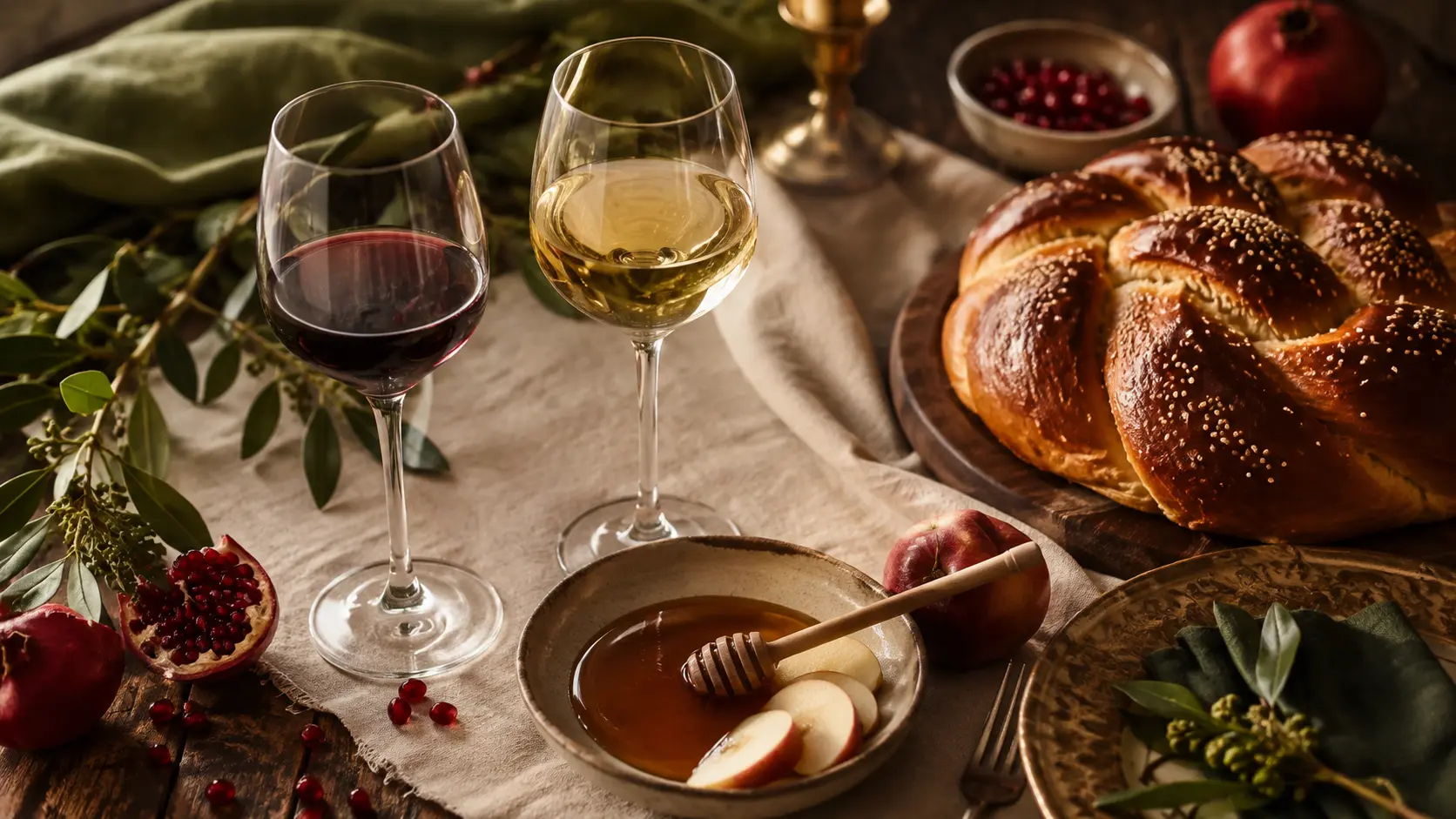
Apples dipped in honey, a round challah, and a table full of family - Rosh Hashana is a feast built for wine.
Rosh Hashana is one of the great eating holidays of the Jewish year, and few meals reward good wine like this one. From the apple dipped in honey to the last slice of honey cake, the table moves through sweet, fresh, savory, and rich in turn - and each course has an Israeli wine that makes it sing. This guide walks the holiday meal course by course, matching every dish to a style of wine and pointing you toward the local wineries doing it best. Whether you are hosting twenty or setting a quiet table for two, here is how to pour your way into a sweet new year.
Apples, Honey & the Sweet Opening
The evening opens with the blessing over apple dipped in honey - a wish for a sweet year ahead. Reaching straight for a bone-dry wine here is a common mistake; against all that honey it can taste sour and thin. The better move is to meet sweetness with a touch of sweetness. An off-dry white - Gewürztraminer, Riesling, or a lightly sweet Muscat - echoes the honey, flatters the apple, and eases everyone gently into the meal.
Golan Heights Winery
Katzrin, Golan Heights
Founded in 1983, Golan Heights Winery is Israel’s most internationally recognised producer, and its cool volcanic vineyards are ideal for aromatic whites. The Yarden and Gilgal Gewürztraminer bottlings are floral and just off-dry, with notes of lychee, rose, and honeysuckle that land perfectly against apples and honey. Widely available and certified kosher, it is the easiest crowd-pleaser to put on the table for the opening blessing.
Recanati Winery
Hefer Valley, Galilee fruit
Recanati is one of the country’s most respected mid-size wineries, known for coaxing Mediterranean character out of Galilee fruit. For the sweet opening, look to their lighter, fruit-forward whites and white blends - fresher and less overtly sweet than a Gewürztraminer, but with enough roundness to sit happily beside honey. A good choice if some guests prefer a wine that leans crisp rather than dessert-like.
Carmel Winery
Founded 1882, various regions
Israel’s oldest and largest winery, Carmel offers something for every budget and is stocked in almost every supermarket - convenient when you are buying for a big table. Their Moscato and lightly sweet whites are gentle, low-alcohol, and openly fruity, which makes them an approachable pour for guests who do not usually drink dry wine. An easy, affordable way to toast the new year sweetly.
Round Challah, Dips & Starters
Before the main event come the salatim, the dips, and that beautiful round challah symbolising the cycle of the year. This is a course of many small, bright flavours - tahini, hummus, roasted vegetables, chopped salads - and it calls for crisp, high-acid whites that refresh the palate between bites. Sauvignon Blanc, Chenin Blanc, and unoaked Chardonnay all shine here, keeping the table lively without competing with the food.
Tishbi Winery
Zichron Ya’akov
A veteran family winery near Zichron Ya’akov, Tishbi has been growing grapes for five generations and makes some of Israel’s most reliable, food-friendly whites. Their bright Chardonnay and Emerald Riesling are exactly the kind of clean, refreshing pour that suits a spread of dips and starters. Approachable pricing and wide availability make Tishbi a dependable choice for the early part of the meal.
Galil Mountain Winery
Kibbutz Yiron, Upper Galilee
Set high in the Upper Galilee near Kibbutz Yiron, Galil Mountain works cool-climate vineyards that give its whites real freshness and cut. The Sauvignon Blanc and Viognier carry the zippy acidity you want alongside sharper dips and lemony salads. Sustainability runs through the whole estate, and the wines are consistently good value - an easy bottle to buy by the case for a crowd.
Vitkin Winery
Kfar Vitkin, Sharon Plain
Vitkin built its reputation on championing Mediterranean grape varieties that few others in Israel were bothering with. Their characterful whites - think Grenache Blanc, French Colombard, and Viognier - bring texture and personality to the starters, turning the dips course into something worth lingering over. A lovely pick for guests who like their whites with a bit more to say.
Fish & the Pomegranate Course
Many tables serve a whole fish on Rosh Hashana - a symbol of abundance and of a year ahead “full as a fish is full of scales.” Alongside it often comes pomegranate, another symbol of a fruitful year. This lighter, brighter course wants a dry rosé or a crisp white: enough fruit to meet the pomegranate’s tang, enough acidity to keep the fish clean and fresh.
Recanati Winery
Hefer Valley, Galilee fruit
Recanati’s dry rosé is one of the most versatile, crowd-pleasing pink wines in the country - pale, dry, and full of red-berry freshness. It bridges fish and pomegranate effortlessly, and its gentle fruit flatters a salad without overwhelming delicate flesh. If you want a single bottle to carry the whole lighter course, this is it.
Tulip Winery
Kfar Tikva, Galilee
Tulip is based in Kfar Tikva, a village for adults with special needs who form part of the winery team - a genuinely meaningful story to share around the holiday table. The wines are polished and balanced, and their whites and rosé bring an elegant lift to a delicate fish course. A bottle with heart as well as quality, which feels right for the new year.
Flam Winery
Judean Hills
One of the most admired family estates in Israel, Flam brings Tuscan-trained precision to the Judean Hills. Flam Blanc - a Sauvignon Blanc and Chardonnay blend - and the Flam rosé are refined, mineral, and beautifully balanced, ideal when you want the fish course to feel a touch special. Not the cheapest option on this list, but a memorable one.
Brisket, Roasts & the Main Event
Now for the centrepiece - slow-braised brisket, roast chicken, or a honey-glazed roast that ties the meal back to the season’s sweetness. This is red-wine territory, and it wants structure: Cabernet Sauvignon, Syrah, Carignan, and full-bodied blends with the tannin and depth to stand up to rich, savoury-sweet dishes. Israel’s warm-climate reds are built for exactly this kind of food.
Psagot Winery
Judean Hills / Binyamin
Psagot’s sun-drenched hillside vineyards produce bold, ripe, generous reds that were made for a holiday roast. The Cabernet Sauvignon and the flagship “Edom” blend are plush and full-bodied, with enough backbone to cut through a fatty brisket. A confident, celebratory red that reads as a special-occasion bottle without breaking the bank.
Dalton Winery
Upper Galilee
At around 900 metres in the Upper Galilee, Dalton’s high-altitude vineyards give its reds freshness alongside power. The Syrah and old-vine Carignan bring smoky, peppery spice that plays beautifully against a honey-glazed roast, while the acidity keeps everything from feeling heavy. A great pick when you want a red with lift as well as muscle.
Adir Winery
Kerem Ben Zimra, Upper Galilee
A boutique Galilee producer with a devoted following, Adir makes plush, deeply flavoured reds that feel indulgent in the best way. Their Cabernet and Shiraz are rich and rounded - a natural fit for the main course when you want something a little more special than an everyday bottle. Availability is more limited, so grab it when you see it.
Barkan Winery
Kibbutz Hulda, various vineyards
One of Israel’s largest producers, Barkan is dependable, widely available, and priced for buying in quantity - exactly what a big holiday table often needs. The Classic and Reserve Cabernet and Petite Sirah deliver ripe, straightforward red-fruit character that everyone at the table will enjoy. When you are pouring for a crowd, this is the safe, sensible workhorse red.
Somek Winery
Zichron Ya’akov
A boutique estate farming old vines around Zichron Ya’akov, Somek makes characterful, small-production reds with real personality. Their Carignan and Mediterranean blends offer a more distinctive, less mainstream alternative for the main course - a lovely upgrade if you want to pour something your guests probably have not tried. Worth seeking out for the wine lover at the table.
Honey Cake & Dessert
The meal ends as sweetly as it began - honey cake, teiglach, apples, and fresh fruit. The golden rule of dessert pairing is that the wine should be at least as sweet as the plate, or it will taste tart and hollow. Reach for a late-harvest or fortified wine: a botrytis dessert white, a sweet Muscat, or a port-style red will match the sugar and carry the honeyed flavours right through to the end.
Golan Heights Winery - Yarden Heightswine
Katzrin, Golan Heights
If you buy one dedicated dessert wine for the holiday, make it this. Yarden Heightswine is a late-harvest Gewürztraminer, luscious and honeyed with apricot, orange peel, and ginger, yet balanced by fresh acidity so it never cloys. Poured alongside honey cake it is close to a perfect match - the wine and the cake seem to finish each other’s sentences.
Visit the Golan Heights Winery - Yarden Heightswine listing →
Taste Before the Chag
Want to taste before you commit? A wave of tastings and festivals lands in the weeks before Rosh Hashana - a perfect chance to try holiday bottles firsthand, meet the winemakers, and stock up for the seder table. Here are some of the events happening in the run-up to the chag.
Tzora Vineyards Open House
Sep 10 · Judean Hills
Somek Winery Tasting & Sale
Sep 4 - 5 · Zichron Ya’akov
Zichron Ya’akov Wine Festival
Sep 2 - 5 · Zichron Ya’akov
A Sweet New Year, Bottle by Bottle
The beauty of pairing wine to a Rosh Hashana meal is that the holiday practically writes the pairings for you. Sweet openings want off-dry whites; bright starters want crisp ones; the fish course wants rosé; the brisket wants a bold red; and the honey cake wants something sweeter still. Follow the food and you cannot go far wrong.
Best of all, every one of these bottles comes from an Israeli winery worth knowing - producers turning local fruit into wines that belong on a celebratory table. Pour generously, taste widely, and let the country’s wineries carry your family into the new year.
Shana Tova u’Metuka - wishing you a good and sweet new year.

You must be logged in to post a comment.